
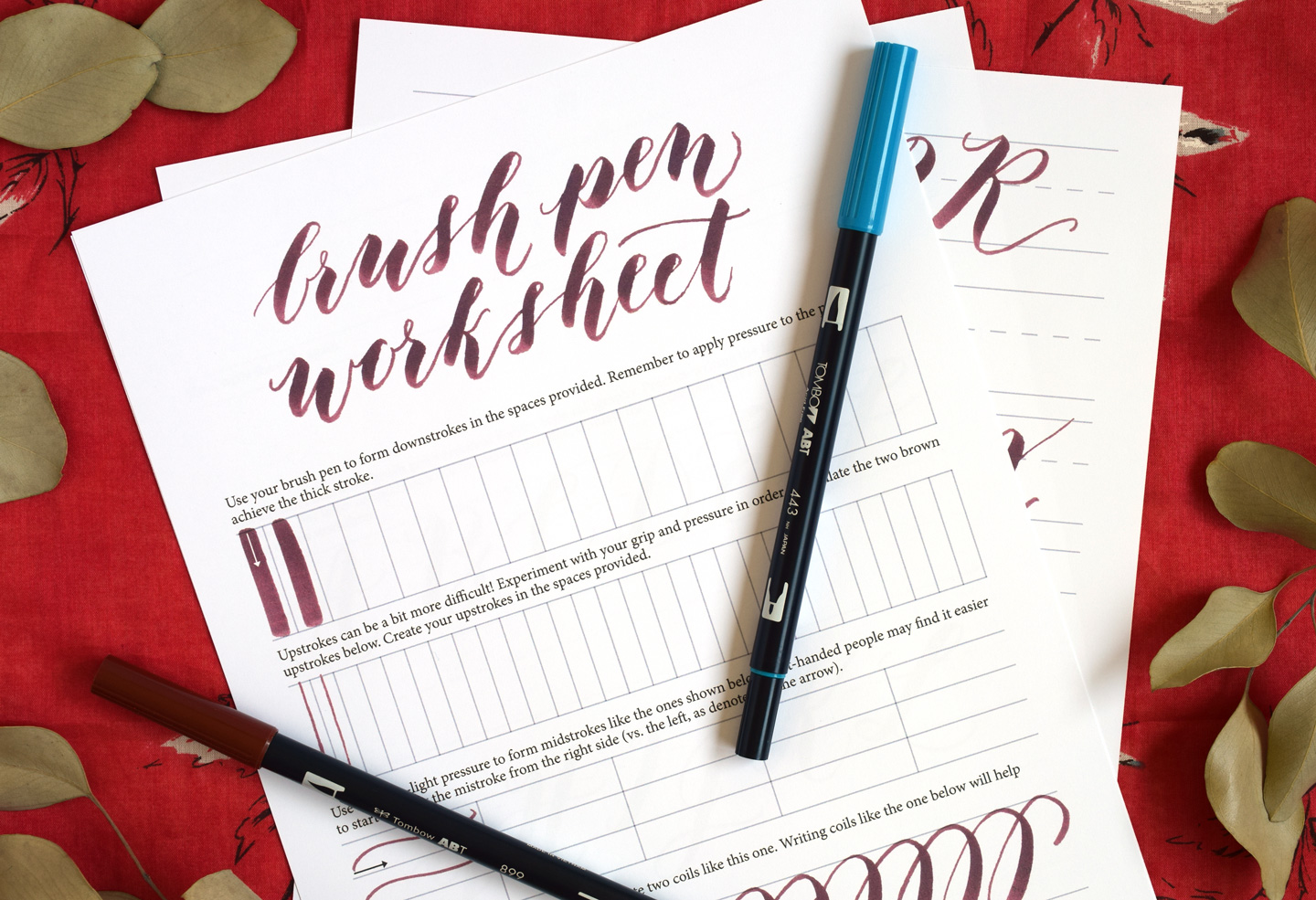
Grab your favorite brush pen and let's draw some beautiful letters together! If you are brand new to modern calligraphy, the best brush pen is the one that helps your hand feel calm and in control. That usually means a tip that is not too soft, ink that does not blob or flood, and a size that makes it easy to see what your strokes are doing.
What makes a brush pen beginner-friendly
When a brush pen feels tricky, it is rarely your fault. Many pens are designed for fast, expressive lettering, not careful first drills. Here is what to look for when you want a forgiving start.
- A firmer, springy tip: A tip with a little resistance is easier to control than a very soft, floppy brush.
- Consistent ink flow: Beginners do best with pens that start easily and do not suddenly flood the paper.
- A medium tip size: Think “not micro, not jumbo.” If a tip is tiny enough to feel scratchy or large enough that one downstroke fills the whole line, it will usually feel harder to control at first. A mid-size tip lets you see thick and thin clearly without magnifying every wobble.
- Works on common paper: A beginner-friendly pen should behave on smooth everyday options like decent printer paper, smooth notebook paper, or marker paper, not only on specialty pads.
If you want a quick foundation before shopping, hop over to Tutorials & Practice Drills for warmups like pressure drills, compound strokes, and basic lowercase practice.
Tip types
Fiber brush tip (felt-like)
This is one of the most common brush pen tip styles for beginners. It looks like a tapered marker tip and usually offers steady control. Many fiber tips are excellent for learning pressure changes because they respond predictably.
- Best for: everyday practice, learning consistent downstrokes and light upstrokes
- Watch for: fraying if used on rough paper
Small brush tip
Small tips are wonderful for small letters, envelopes, and tight spacing. They can be beginner-friendly if they are not too sharp or scratchy.
- Best for: smaller projects, neat styles, learning control
- Watch for: pressing too hard and damaging the tip
Soft brush tip (very flexible)
Super soft tips can create gorgeous bounce and dramatic contrast, but they can also feel slippery at first. These are usually better as a second or third brush pen once you have pressure basics.
- Best for: expressive lettering, big flourishes, bold signage
- Watch for: thick strokes that balloon, shaky hairlines, accidental blobs
Best brush pens for beginners
Below are brush pens that are widely known for reliability and approachability. Every hand is different, so think of these as strong starting points rather than a single perfect answer.
Pentel Fude Touch Sign Pen
This is a classic starter choice because the tip is small, springy, and easy to steer. The scale is friendly for practice sheets and everyday words.
- Why beginners like it: controlled tip, easy to make thin upstrokes, less intimidating size
- Great for: lowercase practice, small quotes, card messages
- Heads up: it is not a huge-contrast pen, so the thick-thin difference is more subtle
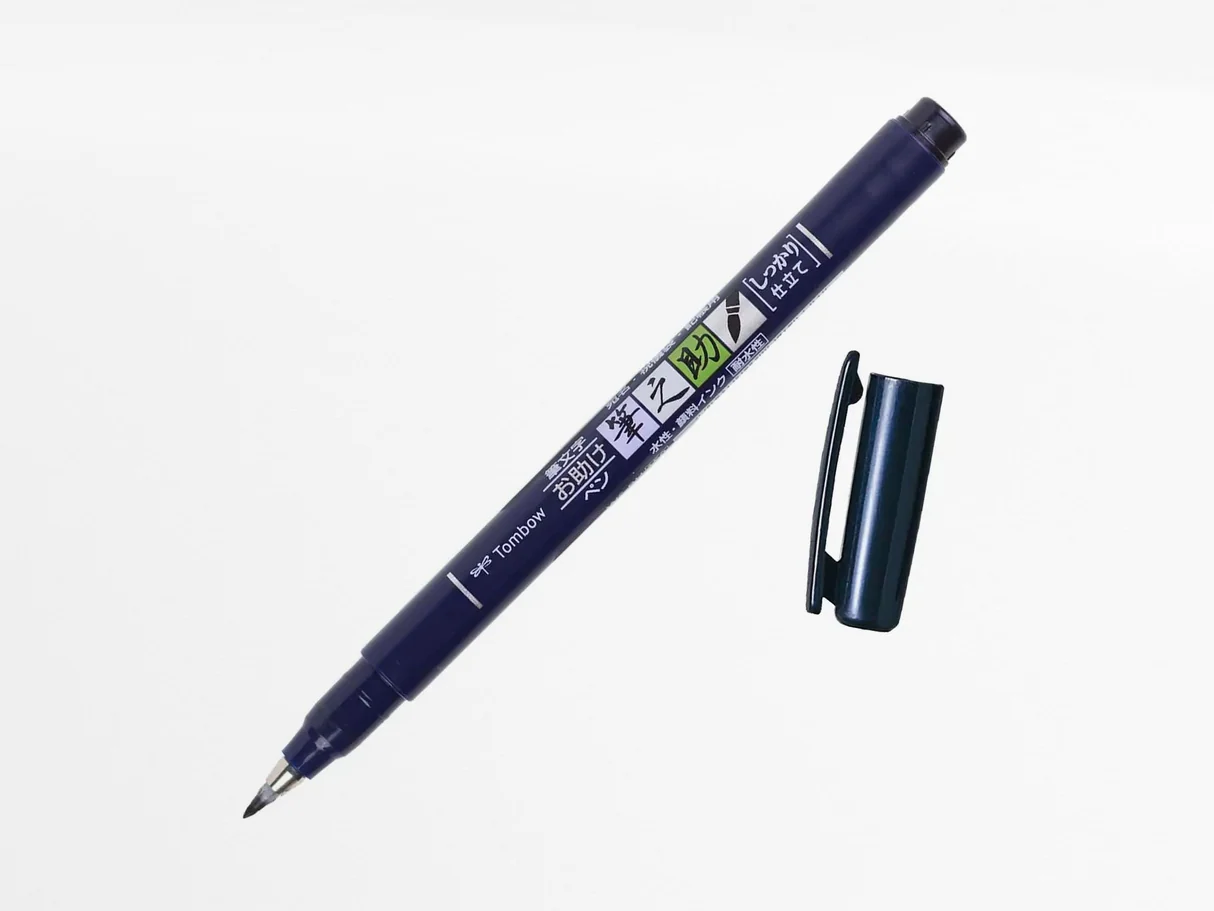
Tombow Fudenosuke (Hard Tip and Soft Tip)
If you can only pick one “learn control” pen, many beginners reach for the hard tip. The soft tip is still beginner-friendly, just bouncier.
- Why beginners like it: clean lines, dependable flow, excellent for learning pressure without over-flexing
- Great for: modern calligraphy practice, faux bounce lettering, small envelopes
- Heads up: use smooth paper to keep the tip crisp longer
Faber-Castell PITT Artist Pen Brush
These brush pens use pigment-based ink. Many people find pigment ink feels a bit more “pen-like” and controlled on the page, especially when they want crisp practice they can keep.
- Why beginners like it: steady performance, crisp strokes, less likely to feel slippery
- Great for: practice that you want to keep, sketch-notes with lettering, mixed-media pages
- Heads up: pigment inks can feel different than dye inks, so give your hand a page or two to adjust
Zig Kuretake Cartoonist Brush Pen (No. 22)
This one is beloved for expressive lines, but it still offers control if you practice slow, steady pressure. It is a good “next step” brush pen when you want more range without jumping to the floppiest tips.
- Why beginners like it: smooth strokes, satisfying contrast potential
- Great for: larger practice words, bold styles, playful headers
- Heads up: go lightly on upstrokes, and use paper that does not feather
Karin Brushmarker Pro
If colorful inks make you want to practice, this line is a happy place to play. The ink is vibrant and the marker format is straightforward, which can make practice feel more inviting.
- Why beginners like it: color payoff, fun for projects, smooth coverage
- Great for: rainbow words, cards, seasonal DIY tags
- Heads up: on very absorbent paper, bright ink can spread. Choose smoother paper for crisp edges.
Simple starter setup
It is tempting to buy a huge set, but a tiny toolkit helps you learn faster. Here is a calm, beginner-friendly starter setup.
- One small, firm brush pen: like Pentel Fude Touch or Tombow Fudenosuke Hard Tip
- One slightly softer brush pen: like Tombow Fudenosuke Soft Tip or a medium brush tip you feel curious about
- Smooth practice paper: to protect tips and reduce feathering
- A pencil and eraser: for guidelines and spacing practice
- A ruler: for quick baseline grids
More supply basics live in Tools & Supplies, including what to look for in paper and beginner-friendly alternatives when you are practicing on a budget.
Paper matters
Even the best brush pen can feel “bad” on rough or fibrous paper. When paper grabs the tip, you will see:
- Feathering: fuzzy edges as ink spreads along paper fibers
- Bleeding: ink soaking through to the back
- Fraying: brush tips getting fuzzy or split
For practice, aim for smooth paper. Many beginners enjoy marker paper or smooth, heavier notebook paper. If you are using regular printer paper, use a gentle hand and accept that tips may wear faster.
One small habit that saves a lot of frustration: test new pens on a corner of your paper first. Some inks, especially very juicy or pigment-heavy formulas, can bleed through thin sheets.
If your strokes feel scratchy or your tip is fraying quickly, switch the paper before blaming your technique.
Hard tip vs soft tip
Pick a hard tip if you want
- more control and a gentler learning curve
- cleaner hairlines without accidental thickening
- small lettering for notes, labels, and envelopes
Pick a soft tip if you want
- more dramatic thick-and-thin contrast
- larger lettering with bouncy rhythm
- an expressive, brushy look sooner
If decision-making makes your whiskers twitch, choose hard tip first. Once your hand understands “pressure on downstrokes, feather-light on upstrokes,” soft tips become a joy instead of a wrestling match.
Beginner mistakes
Pressing on upstrokes
Try lifting to the point where you almost feel like you are skating on top of the paper. Upstrokes are the “whisper” strokes.
Holding the pen too upright
A slight angle often helps the tip glide. Keep a relaxed grip and let the pen do the work.
Going too fast too soon
Speed comes after consistency. Slow strokes teach your hand the path. Later, your rhythm will naturally pick up.
Practicing letters before strokes
Strokes are the building blocks. A few minutes of drills makes letters smoother and more confident. You can find more practice ideas in Tutorials & Practice Drills and style guidance in Styles & Techniques.
Left-handed tips
Lefties can absolutely thrive with brush pens. The main nuisance is smudging, especially if you are an overwriter (your hand moves across fresh ink). A few gentle tweaks help a lot:
- Angle your paper: rotate it slightly clockwise so your hand follows the line with less dragging.
- Slow down just enough: clean pressure changes matter more than speed, and speed often causes smears.
- Choose smoother paper: it helps ink sit cleanly and dry more predictably.
- Work top-left to bottom-right when you can: it keeps your palm off the freshest strokes.
If you still get smudges, try writing a touch smaller and using a lighter hand on downstrokes. Less ink on the page usually means faster drying.
Care tips
- Use smooth paper: it is the biggest tip-saver.
- Cap tightly: brush pens dry out when left uncapped.
- Store horizontally if possible: it can often help ink stay evenly distributed, especially for dual-tip markers.
- Do not mash the tip: build pressure gradually for downstrokes.
- Keep hands clean: skin oils and lotion can affect ink flow on the page.
FAQ
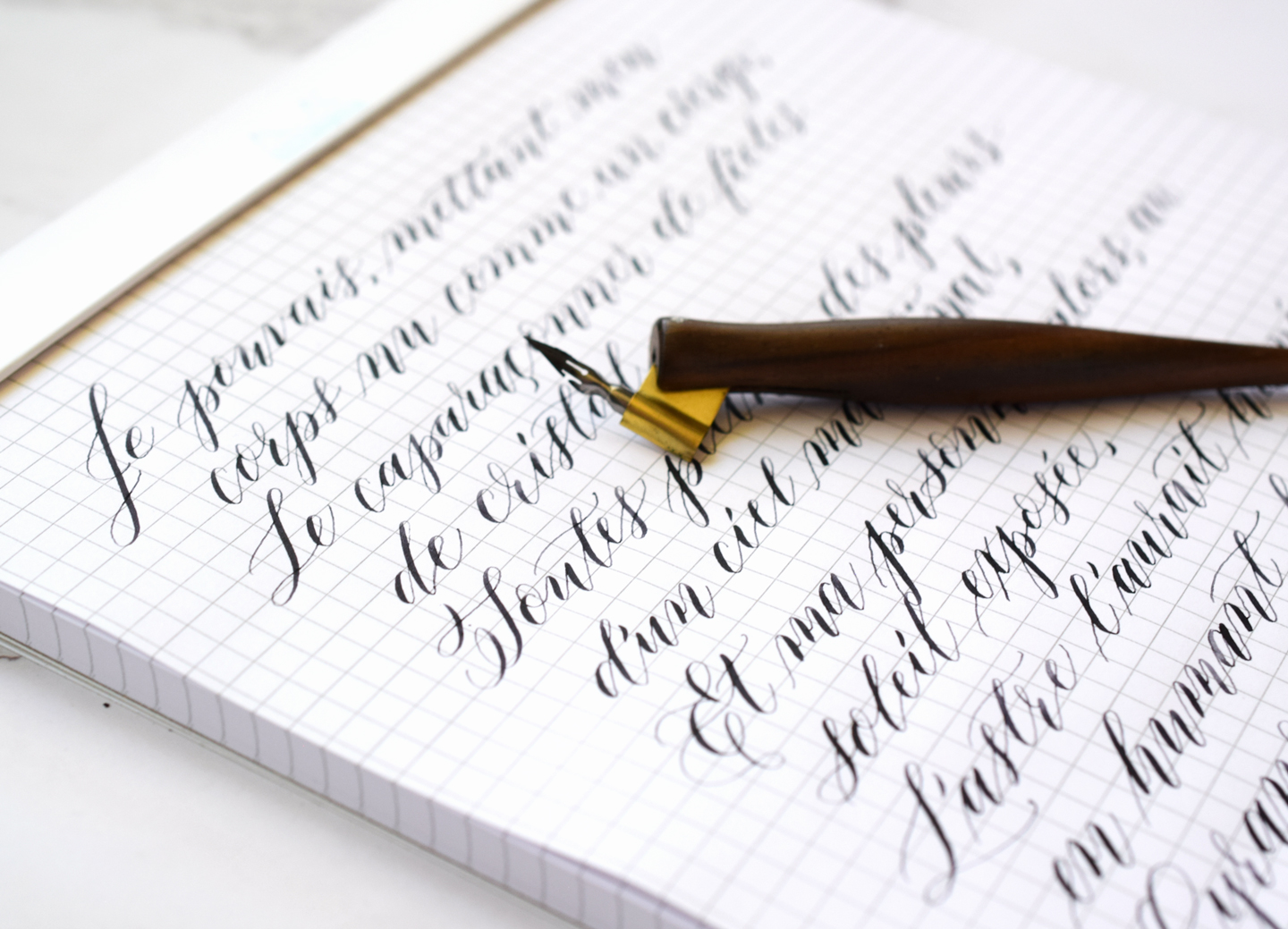
Should I start with brush pens or dip pens?
Brush pens are often the easiest first step because they are portable and consistent. Dip pens are wonderful too, but they add extra variables like nib choice, ink consistency, and cleaning. If brush pens feel fun and approachable, they are a perfect beginning.
How many brush pens do I need as a beginner?
One firm small brush pen plus one slightly softer option is plenty. Mastering pressure and spacing matters more than having lots of colors.
Why do my lines look fuzzy?
Most often it is the paper. Try smoother paper, slow down a little, and check that you are not overloading the page with repeated strokes in the same wet spot.
My pen is skipping. Is it broken?
Not always. Skipping can happen if the paper is very textured, if the tip is running dry, or if the angle is too steep. Try smoother paper, rotate the pen slightly in your fingers, and make sure the cap has been on securely between sessions.
What if I cannot find the exact pen you listed?
No worries. Look for a brush pen with a small-to-medium, fairly firm fiber tip and water-based ink for practice. If you can test in person, make a few slow downstrokes and upstrokes and choose the one that feels steady, not slippery.
Ready to practice?
Once you have a pen that feels steady, the next best step is simple drills and short words. A few minutes a day is plenty to build muscle memory. When you want a cozy corner of guidance, scamper over to Tutorials & Practice Drills, then bring your favorite pen back here and let those swoops get smoother one happy stroke at a time.