“Grab your favorite brush pen and let's draw some beautiful letters together!”
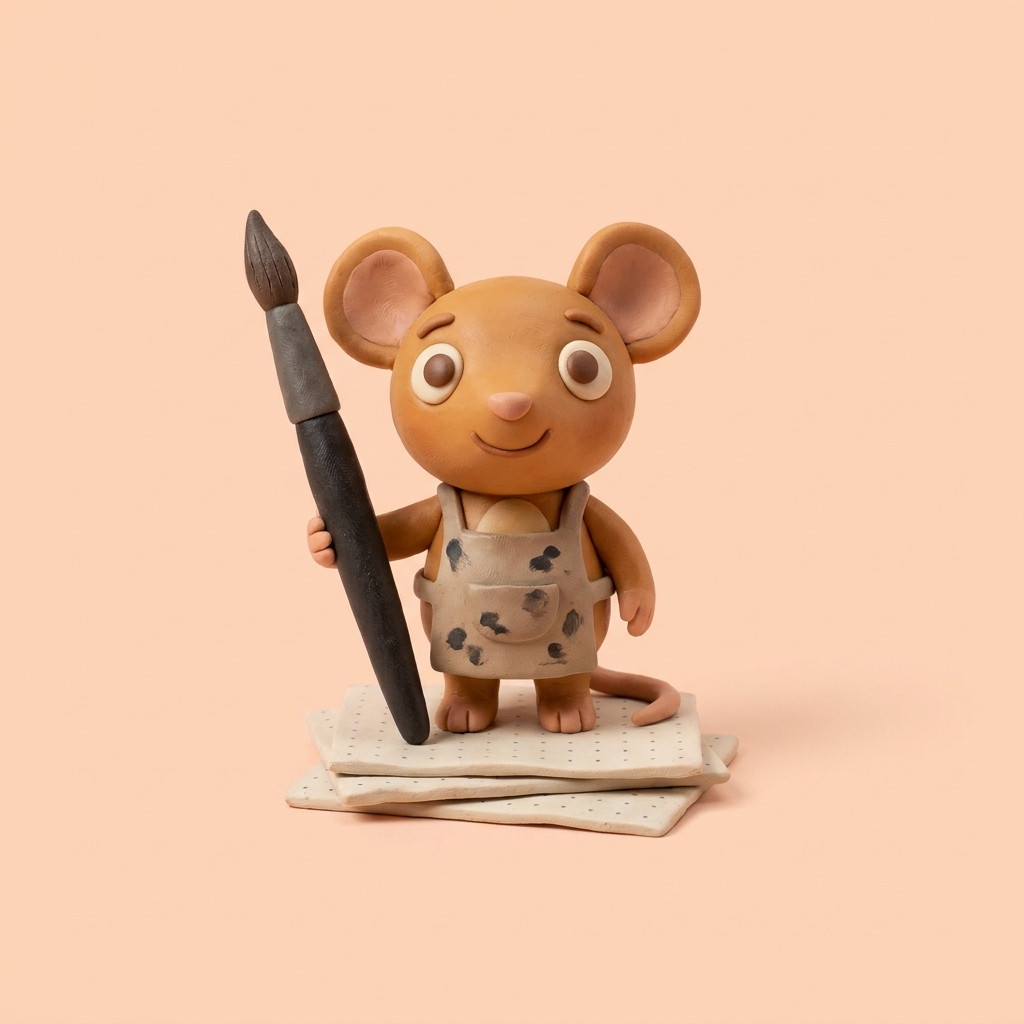
Welcome to The Brush Letter, where hand lettering and calligraphy get to be friendly, playful, and doable. Nib is the site’s mascot and host, a tiny field mouse with a big love for colorful inks, bouncy strokes, and the kind of steady practice that turns wobbly lines into confident letterforms.

Nib is a fictional character, which means the magic here is not about one person’s life story. It is about simple, repeatable habits that help anyone build lettering skills. Nib’s job on these pages is to keep things clear, encouraging, and easy to return to when you want a calm creative reset.
Who is Nib?
Nib is the little field mouse host of hand lettering and calligraphy, always ready to cheer you on as you explore new styles and shape words that feel like you.
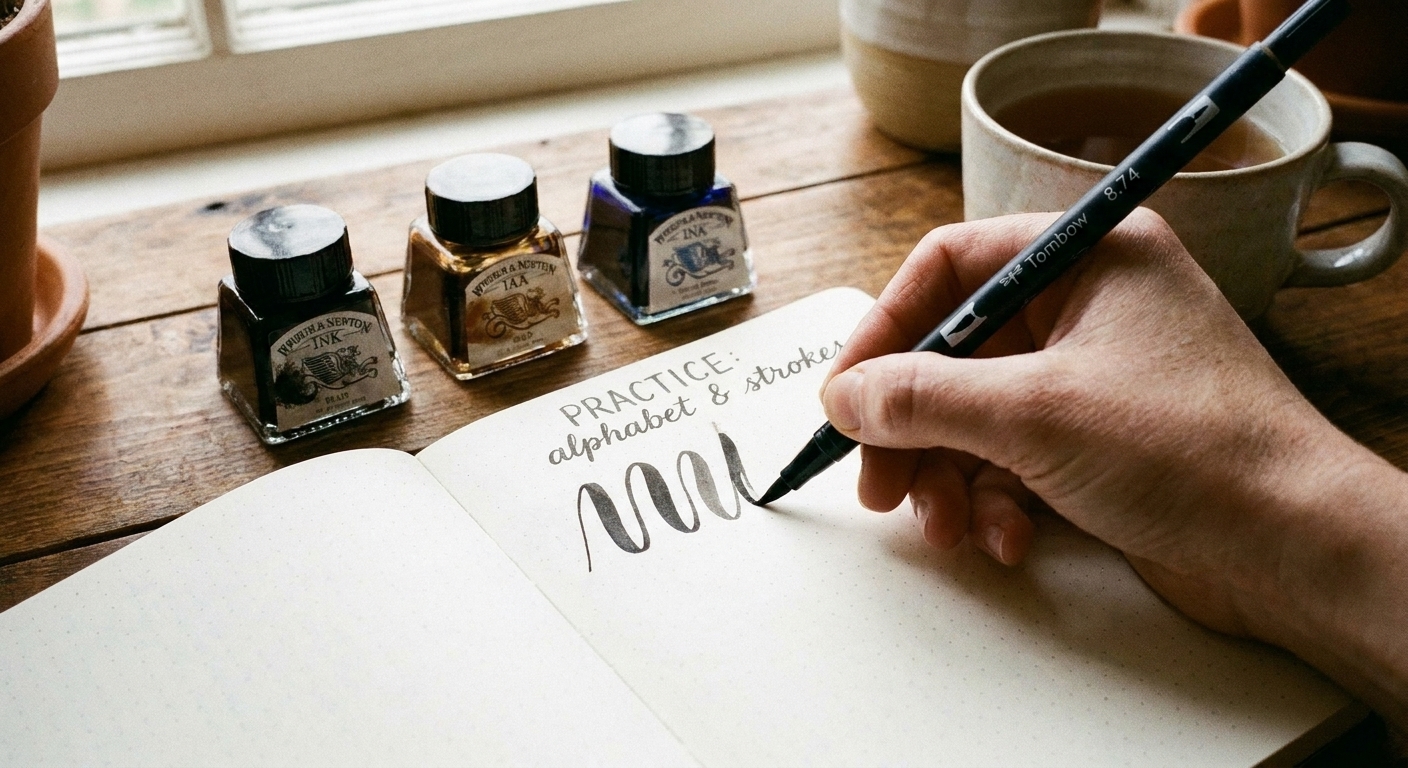
Nib believes every beautiful word starts with a simple swoop and a smile. Then we make it practical: in your first short session, you will learn the two strokes that show up everywhere, a light upstroke and a heavier downstroke, and use them to build a few simple letters.
What this site does
The Brush Letter exists to make modern hand lettering and calligraphy feel welcoming. That includes beginners who are picking up a brush pen for the first time, and experienced doodlers who want more consistency, cleaner shapes, and fresh ideas.
The mission is simple:
- Make practice joyful. Repetition can be soothing when it is broken into small, friendly drills.
- Keep instructions clear. Lettering has enough mystery already. The steps should not.
- Celebrate your style. Perfect is not the goal. Progress and personality are.
- Help you make things. Lettering becomes extra fun when it ends up on a card, a label, a sign, or a handmade gift.
Lettering vs. calligraphy
If you have ever wondered what the difference is, here is the simplest way to think about it:
- Hand lettering is drawing letters. You can take your time, sketch, erase, and build each shape.
- Calligraphy is writing letters with a tool that responds to pressure. The goal is smooth movement and consistent strokes.
On this site, you will see both, and you do not have to pick a lane on day one. Many people start by drawing letterforms, then ease into brush calligraphy as their strokes get steadier.
What you need to start
You can begin with just a few basics:
- A brush pen. Something with a flexible tip.
- Smooth paper. Smooth helps your pen glide and keeps tips from fraying.
- Any notebook you like. Dots or lines can be helpful, but not required.
If you want help choosing what to use (or making what you have work better), head to Tools & Supplies.
Where to begin
Nib will guide you through a few corners of the studio, depending on what you feel like learning today.
Tutorials and drills
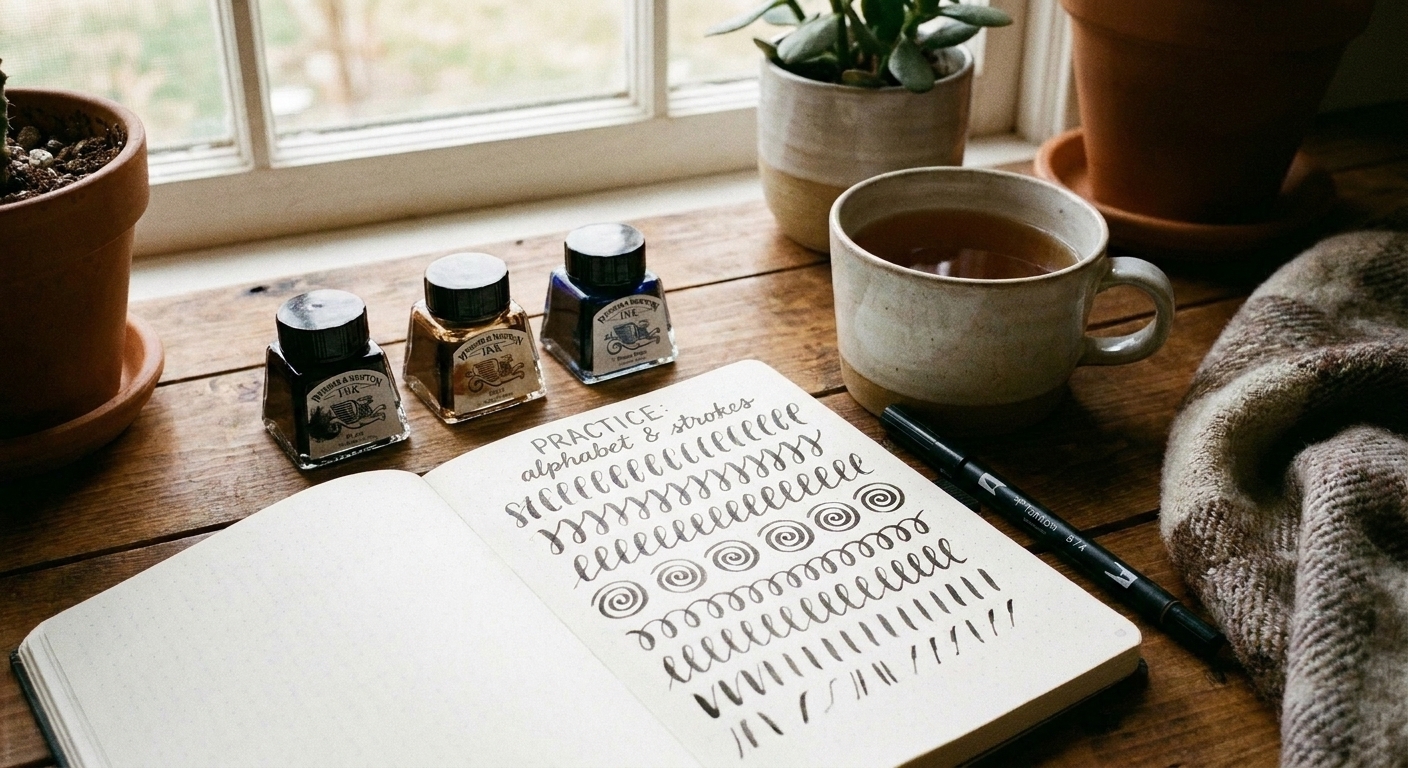
If you love structured steps, start with Tutorials & Practice Drills. Expect warm-ups, stroke basics, and repeatable exercises you can do in short sessions. Practice does not need to be long to be effective. It just needs to be consistent.
Styles and techniques
Curious about different looks and how they work? Visit Styles & Techniques. This is where lettering gets to stretch and play, from clean scripts to bolder, more expressive forms. You will find tips that help you understand why a style looks the way it does, and how to try it without feeling stuck.
Tools and supplies
New pens can be exciting, but they can also be confusing. The Tools & Supplies section is here to help you understand what different tools are for, what to look for when choosing supplies, and how to set yourself up for smoother strokes with the materials you already have.
DIY projects and crafts
When you are ready to put lettering into the world, hop over to DIY Projects & Crafts. This is where practice becomes something you can share, gift, display, or tuck into a journal. Projects are a gentle way to learn because they give your letters a purpose and a playful finish line.
A simple learning path
If you want a plan you can follow, Nib recommends this gentle order:
- Strokes first in Tutorials & Practice Drills
- Basic letter shapes and spacing in Styles & Techniques
- Connecting letters into words, one slow line at a time
- Finish with a project in DIY Projects & Crafts
The Nib approach
Hand lettering and calligraphy are built from a few friendly building blocks. Nib keeps coming back to these basics because they work for just about everyone:
- Start with strokes, not full alphabets. Curves and lines are easier to improve than 26 separate letters.
- Go slow enough to stay smooth. Speed can come later. Consistency comes first.
- Practice in short loops. Two to ten minutes can be plenty when you repeat a focused drill.
- Notice pressure changes. Many modern styles depend on light upstrokes and heavier downstrokes.
- Keep it kind. A “messy” page is often a page where learning is happening.
Welcome in
If you spot something that needs a correction, want to ask a question, or have an idea for what you would like to learn next, Nib would love to hear from you. The best way to reach the site is the contact form at /contact/.
For the official details on how this site works, you can also read the Privacy Policy and Terms of Service.
Now, take a deep breath, make one slow swoop, and begin right where you are. Nib will be here, cheering for every wiggly line that turns into a letter you love.